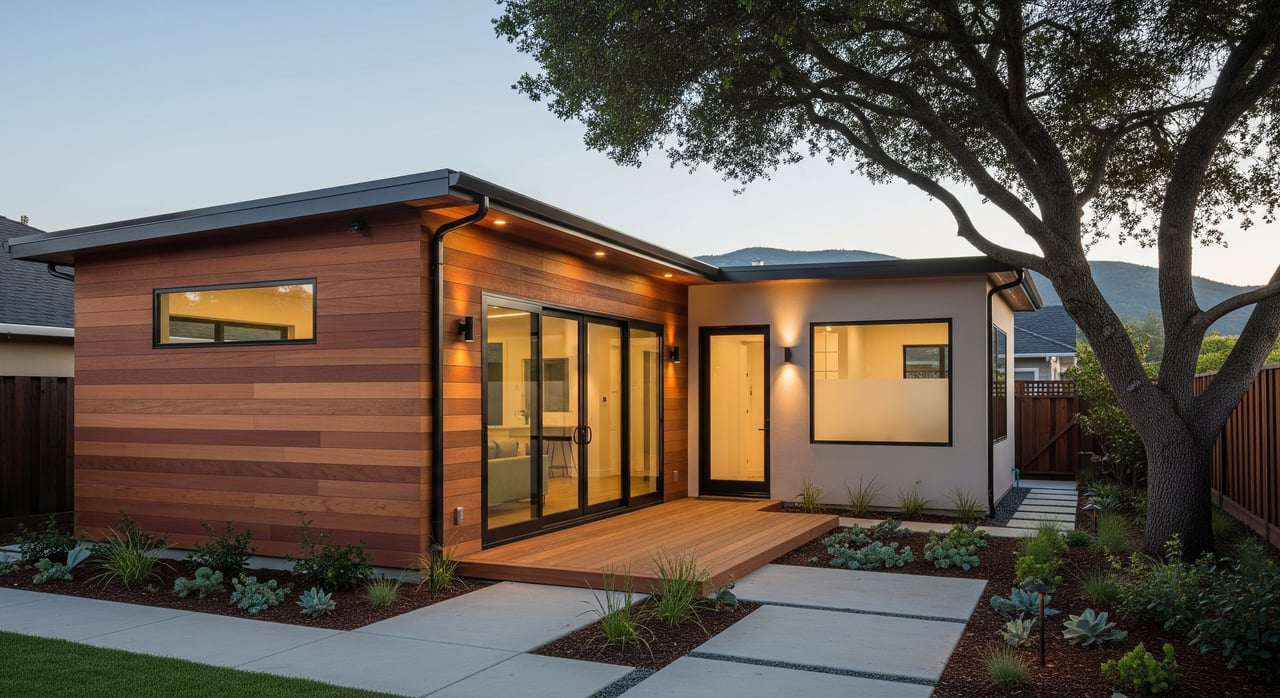
Thinking about adding an ADU to your Campbell property but want the rules in plain English? You are not alone. Many homeowners and investors see ADUs as a smart way to create multigenerational space or long-term rental income, yet the path can feel technical. This quick overview gives you the state basics, what Campbell typically checks, and a simple plan to move forward with confidence. Let’s dive in.
What California guarantees for ADUs
California law makes ADUs broadly permissible and faster to approve when you meet objective standards. Applications that comply with the checklist of rules are reviewed ministerially, which means no discretionary hearings just for the ADU.
ADU types recognized by the state
- Detached ADU: a new, separate structure on your lot.
- Attached ADU: connected to or within the primary home.
- Conversion ADU: built by converting existing space like a garage or accessory structure.
- Junior ADU (JADU): created within the existing single-family home or attached garage, with a typical state cap of 500 square feet.
Key statewide provisions to know
- Streamlined approvals: Objective, ministerial review helps shorten the process compared to discretionary permits.
- Setbacks: Many jurisdictions use up to 4 feet for side and rear setbacks for detached ADUs where safety codes allow; confirm local standards in Campbell.
- Parking: No extra parking can be required for ADUs that are within one-half mile of public transit, converted within an existing structure, in a historic district, in areas with on-street permit programs within one-quarter mile, or near a car-share within one-quarter mile.
- Fees: Small ADUs often benefit from reduced impact fees. Under state law, ADUs of 750 square feet or less are generally exempt from certain development impact fees. Larger units may be charged proportionally.
- Owner-occupancy: State law limits when cities can require owner-occupancy. Whether this applies depends on timing and local code, so verify the current rule with Campbell.
- CEQA: Many ADUs that meet objective standards are exempt from CEQA review, which helps reduce process risk.
Campbell permitting at a glance
Campbell follows the state framework and uses objective standards. You should expect concurrent planning and building checks.
Pre-application: Contact the City of Campbell Planning Division or Development Services. Ask for the ADU handout or checklist and confirm parcel eligibility.
Zoning confirmation: Identify your zoning district and any overlays that apply. Ask specifically which objective standards control your ADU.
Prepare materials: Typical submittals include a site plan, floor plans, elevations, structural details for conversions, parking plan, utility and energy (Title 24) forms, and owner declarations if applicable.
Submit applications: File planning review and building permits together to avoid serial delays.
Plan check and corrections: Planning, building, fire, and public works may issue a correction list; revise and resubmit until cleared.
Permit issuance and build: Pay fees, receive permits, and proceed with standard inspections during construction.
Final and occupancy: Complete inspections and obtain final sign-off or a certificate of occupancy, as required.
Key rules to verify in Campbell
Campbell’s municipal code sets exact numbers for size, height, setbacks, parking, and fees. Use the city’s ADU handout and speak with planning staff before finalizing your design.
Setbacks and lot coverage
- Verify the minimum side and rear setbacks for a detached ADU and how front yard rules apply.
- Confirm whether ADU square footage counts toward lot coverage or floor-area-ratio limits.
- Ask about parcel-specific constraints such as floodplain, slope, or easements.
Why it matters: Setbacks and coverage determine where your ADU can sit and whether a detached unit or garage conversion makes sense.
Height and massing
- Ask for the maximum ADU height and whether a two-story ADU is allowed.
- Check any objective design standards, such as roof pitch or exterior materials.
Why it matters: Height drives design options and usable layout, especially for detached units.
Maximum size and JADU rules
- Confirm the maximum square footage for detached and attached ADUs in your zoning district.
- JADUs are typically limited to 500 square feet by state rule; verify how Campbell administers JADUs.
- Ask whether ADU area counts toward total habitable floor area.
Why it matters: Size caps determine whether you are planning a compact studio or a larger one- or two-bedroom layout.
Parking requirements and exemptions
- Review Campbell’s baseline parking rules for new detached or attached ADUs.
- Apply state exemptions: no additional parking when the ADU is within one-half mile of transit, created within an existing structure, in a historic district, or served by on-street permit programs or car-share within one-quarter mile.
- Confirm that converting an existing garage to an ADU does not trigger replacement parking.
Why it matters: Parking can make or break feasibility on small or irregular lots.
Fees and utility connections
- Ask for the current fee schedule and which impact fees apply by ADU size. Small units of 750 square feet or less are often exempt from certain impact fees under state law.
- Confirm water and sewer connection or capacity fees and whether separate meters are required.
- Check for stormwater or grading requirements that could add cost.
Why it matters: Fees and utility work affect overall budget and return on investment.
Historic districts, HOAs, and other constraints
- Verify if your property sits in a historic district or overlay that imposes specific design standards.
- If your property is within an HOA, review covenants to ensure ADUs are not restricted and follow any required approvals.
Why it matters: These constraints can influence design choices and timelines.
Feasibility checklist
Use this quick list before you spend on full plans.
- Zoning: Confirm your district and that ADUs or JADUs are allowed on your parcel.
- Lot layout: Measure setbacks, note driveway location, easements, trees, and utility lines.
- Existing structures: Assess whether a garage or accessory structure can be converted faster than building new.
- Utilities: Ask providers about water and sewer capacity, meter needs, and potential electrical or gas upgrades.
- Fire access: Confirm local fire requirements for access and any defensible space needs.
- Parking: Map potential spaces and check whether state exemptions apply to your site.
- Costs: Get rough cost ranges from at least two local contractors or ADU design-build firms.
- Fees: Request Campbell’s latest fee schedule and note size thresholds.
- Rental plan: Estimate market rents and confirm any local rules for long-term leasing.
- Taxes and insurance: Ask your advisor how an ADU could affect assessments, deductions, and coverage.
- Timeline: Ask the city about current review times and prepare for corrections or utility coordination.
Who to hire and what to ask
Key roles
- Architect or ADU designer: Creates code-compliant plans and optimizes small spaces.
- General contractor or ADU specialist: Prices the job, manages permits, and runs construction.
- Structural or civil engineer: Supports new foundations or structural modifications.
- Energy consultant: Prepares Title 24 documentation required for permits.
- Surveyor: Verifies property lines and setbacks when needed.
- Permit expeditor (optional): Manages city submissions and resubmittals on your behalf.
Smart interview questions
- How many ADUs have you completed in Campbell or nearby cities in Santa Clara County? Can you share references?
- Are you fluent in Campbell’s objective standards and submittal requirements?
- Will you handle plan check comments and coordinate with planning, building, and fire reviewers?
- What is the timeline from schematic plans to final inspection on a typical ADU?
- Are you licensed and insured in California, and can I verify your CSLB license?
- Can you provide a clear cost breakdown for permits and fees, hard costs, soft costs, and contingency?
Bidding and contracts
- Seek at least two to three bids and compare scope line by line.
- Use detailed plans and inclusions so pricing comparisons are fair.
- Carry a 10 to 20 percent contingency and spell out change-order terms in writing.
Timeline, costs, and common risks
Every project is different, but you should plan for a few rounds of plan check comments and potential utility coordination. If you are converting an existing garage, you may move faster than with a new detached unit, depending on site conditions and structural changes.
Expect the most common delays to involve incomplete submittals, surprise utility requirements, or design tweaks to meet objective standards. You can reduce risk by scheduling a pre-application conversation, confirming all numeric standards with Campbell Planning early, and hiring a team that has recent ADU experience in the area.
Your next steps
- Contact Campbell’s Planning Division for the ADU handout and ask about pre-application options.
- Confirm your zoning, lot conditions, and any HOA or historic constraints.
- Meet with two local ADU designers or design-build firms for feasibility and budget input.
- Outline your rental or family-use plan so size and layout match your goals.
If you want experienced, discreet guidance on feasibility, rental strategy, and end-to-end execution, we can help. The Balakrishnan Group brings decades of Silicon Valley experience with investor tools, portfolio oversight, and property management for long-term value.
Ready to explore an ADU on your Campbell property? Reach out to Nikil Balakrishnan to Request a Confidential Consultation.
FAQs
What is an ADU and a JADU in Campbell?
- An ADU is a secondary home on your lot that can be detached, attached, or a conversion, while a JADU is a smaller unit within the existing single-family home or attached garage, typically capped at 500 square feet under state law.
Do you need parking for a new ADU in Campbell?
- Often not, because state exemptions apply when the ADU is within one-half mile of transit, created within an existing structure, in a historic district, or near on-street permit programs or car-share within one-quarter mile.
How big can an ADU be in Campbell?
- Maximum sizes for detached and attached ADUs are set by Campbell’s municipal code, so confirm the current square-foot caps with the Planning Division before designing.
Are owner-occupancy rules required for ADUs in Campbell?
- State law limits local owner-occupancy requirements for many ADUs, but applicability can depend on timing and local code updates, so verify the current standard with the city.
Do small ADUs pay impact fees in Campbell?
- Under state law, ADUs of 750 square feet or less are generally exempt from certain development impact fees, while larger units may pay proportional fees—confirm specifics with the city’s fee schedule.
How long does the ADU permit take in Campbell?
- Timelines vary by workload and submittal quality, but ministerial review applies when your plans meet objective standards, and you can reduce delays by using the city’s checklist and resolving corrections promptly.